
The best contractor websites do three things well: they build trust fast, show real work clearly, and make it easy for visitors to reach out. If your site isn’t doing all three, you’re leaving bids on the table. In 2026, that means leading with your licenses and certifications, displaying your service areas above the fold, and making sure the site loads quickly on a phone. Over 70% of homeowners browse contractor websites on mobile devices, so a mobile-first layout isn’t a minor gap. It’s a lead killer.
Here’s what a high-performing contractor site includes:
- Trust signals front and center: licenses, bonds, insurance, certifications, and Google reviews visible without scrolling
- Mobile-first layout: click-to-call buttons, thumb-friendly forms, and fast load times under three seconds
- Clear visual hierarchy: services and service areas shown above the fold so visitors know immediately if you’re the right fit
- Lead capture built in: estimate request forms, photo-upload options, and multiple contact paths
- SSL certificate: the padlock in the browser bar that tells visitors your site is secure
- Clean navigation: a simple menu that gets people to the right page without guessing
- Fast loading speed: optimized images, caching, and a content delivery network where needed
Get these right, and your website works for you around the clock.

Top contractor websites to inspire your own design
The strongest construction company websites share a common thread: they feel personal, not corporate. Real photos, plain language, and a clear path to contact. Here are examples worth studying, organized by what they do particularly well.
1. Schmitt + Company
Schmitt + Company leads with elegance. The site uses Adobe Garamond Pro, a serif font that signals craftsmanship without saying a word. The homepage opens with a full-width project photo, and the navigation links directly to portfolio, team, and contact. Nothing is buried. It’s a great model for high-end residential contractors who want to position on quality over price.
2. Construction Corfu
This site earns trust through specificity. Project pages include location, scope, and timeline details rather than just a photo gallery. Visitors get context, which is exactly what a buyer evaluating a $50,000 project needs before picking up the phone.
3. Blue Divide
Blue Divide keeps the layout tight and the color palette restrained. The homepage answers the three questions every visitor has: what do you build, where do you work, and how do I get a quote? The estimate button appears in the header and again at the bottom of every page.
4. NOVO Construction
NOVO leans into commercial credibility. The site opens with project scale and client names, which immediately signals that this firm handles serious work. The case study format on project pages, with before-and-after context, gives prospective clients a clear picture of what working with NOVO looks like.
5. PELLCO Construction
PELLCO’s site is built around speed and clarity. The service list is visible within seconds of landing, and the contact form is short: name, phone, project type. That’s it. Short forms convert better than long ones, and PELLCO clearly knows it.
6. Allstate General Contractors
Allstate uses Google review integration directly on the homepage, displaying star ratings alongside short client quotes. Placing social proof at the top of the page, rather than buried in a testimonials tab, is one of the most effective trust moves a contractor site can make.
7. Domus Custom Builders
Domus organizes its portfolio by project type, making it easy for a kitchen remodel prospect to find kitchen work without scrolling through deck builds and basement finishes. That kind of organized browsing keeps visitors on the page longer and reduces bounce.
Pro Tip: Organize your portfolio by project type and budget tier. A homeowner looking for a $30,000 kitchen remodel wants to see similar projects, not your full catalog. Matching their expectations from the first click builds confidence before they ever contact you.
8. Beasley Construction & Associates
Beasley’s site stands out for its team page. Real headshots, short bios, and years of experience listed for each project manager. Buyers handing over a large project want to know who they’re trusting. A team page with real faces answers that question directly.
9. Brad Scott LLC
Brad Scott’s site is a good example of a solo contractor done right. It’s simple, loads fast, and leads with a clear service area. The contact form is above the fold on mobile. For a one-person operation, that’s exactly the right priority.
10. Never Stop Building
This site uses bold typography and a dark color scheme to stand out in a category where most sites look the same. The visual contrast draws attention to CTAs, and the project gallery is optimized for mobile delivery with fast-loading compressed images.
A great contractor website isn’t about looking impressive. It’s about answering the buyer’s questions before they have to ask. License visible? Check. Service area clear? Check. Real project photos? Check. That’s what converts a visitor into a call.
11. C2 Construction
C2 integrates a photo-upload estimate form directly on the homepage. A homeowner can snap a photo of the space they want renovated and submit it in under a minute. That kind of frictionless intake is one of the highest-impact features a contractor site can offer.
12. Keen Building Company
Keen’s site earns attention for its accessibility. Text contrast ratios meet WCAG standards, font sizes are readable on small screens, and the navigation works cleanly with keyboard-only browsing. Accessibility isn’t just good ethics. It expands your audience and protects you from liability.
13. Honest Renovators
The name does a lot of work, and the site backs it up. License number, insurance certificate, and BBB accreditation are all visible on the homepage. For a residential remodeler competing on trust, that level of transparency is a real differentiator.
14. DC Builders
DC Builders uses location-specific pages for each service area they cover. A visitor searching “deck builder in Sacramento” lands on a page built specifically for that city, with local project photos and a local phone number. That’s how you win local search without paying for ads.
15. Turner Construction Company
Turner’s site operates at enterprise scale, but the lessons apply to any size firm. Clear market segment pages, a prominent contact path, and a subcontractor portal that serves a completely different audience without cluttering the main navigation. Segmenting your audience by page keeps the experience clean for everyone.
Platforms like Squarespace, WordPress, and Wix power many of these sites. Each works. The platform matters far less than the design decisions made on top of it.
What design elements actually build trust on a contractor site?
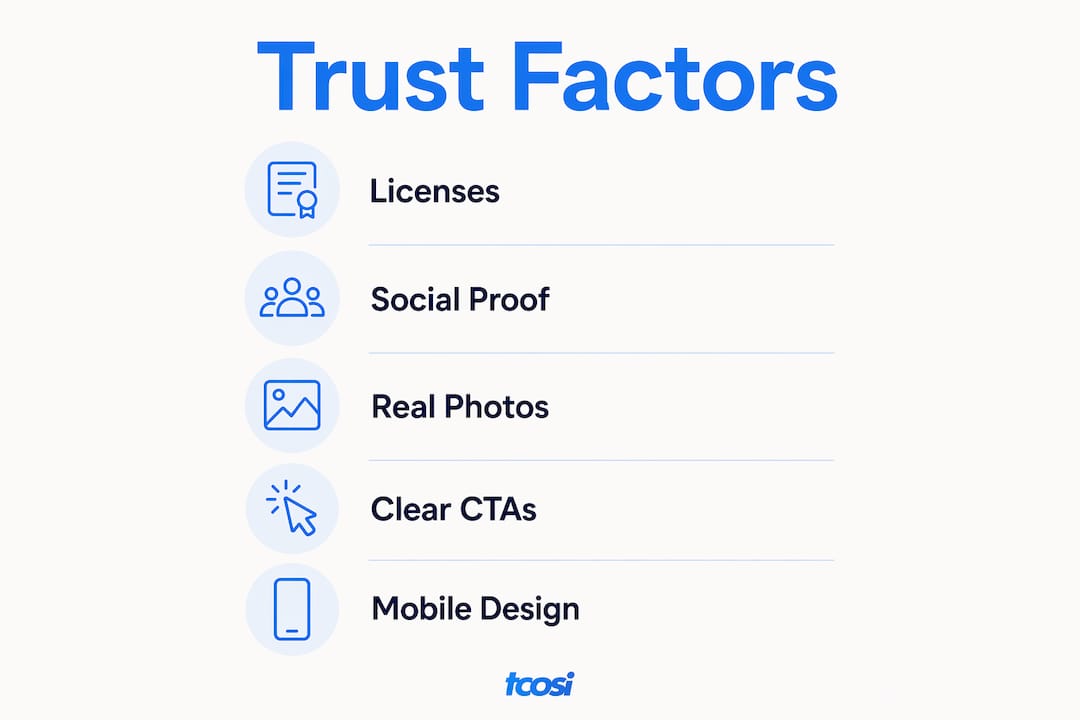
Trust is built before a visitor reads a single word. It comes from how the page looks, how fast it loads, and whether the right information is visible immediately. Here’s what to get right.
Licenses, bonds, and insurance displayed prominently. Don’t make visitors hunt for your credentials. Put your license number, bond status, and insurance information on the homepage and on every service page. Buyers evaluating multiple contractors will check. Make it easy.
Social proof placed in context. A testimonial about your kitchen remodel work belongs on your kitchen remodel page, not just on a generic reviews tab. Placing client testimonials near the relevant service increases their impact because the reader is already thinking about that exact project type.
Real photography over stock images. A photo of your actual crew on an actual job site tells a story no stock image can. Authentic photos of finished work, team members, and the process itself build the kind of trust that converts. Visitors can spot a stock photo of a construction worker holding blueprints from a mile away, and it signals that you have something to hide.
Typography and color that reflect your brand. A luxury custom home builder and a residential handyman service should not have the same visual identity. Your font, color palette, and overall aesthetic should match the type of client you want to attract. That alignment happens before a visitor reads your headline.
Visual hierarchy that guides the eye. Services and service areas need to appear above the fold. CTAs like “Get a Free Estimate” or a click-to-call phone number belong in the header, not buried at the bottom. If a visitor has to scroll to find out what you do or where you work, many of them won’t bother.
Mobile-first and accessible design. Buttons need to be large enough to tap. Forms need to work from a phone camera roll. Text needs to be readable without zooming. Accessibility standards like WCAG 2.1 AA aren’t just for large organizations. They make your site usable for more people, and Google rewards accessible sites in search rankings.
SSL certificate and site security. The padlock icon in the browser bar is a basic trust signal that visitors notice, even if they don’t consciously think about it. A site without SSL looks untrustworthy. Learn more about website security practices and why they matter for client confidence.
How to showcase projects and testimonials so they actually convert
A portfolio page full of photos is a start. A portfolio that’s organized, contextualized, and placed strategically throughout the site is what actually moves buyers.
Organize by project type and budget tier. A homeowner with a $25,000 bathroom remodel budget doesn’t want to browse through commercial builds. Segmenting your portfolio by type and scale lets visitors self-select into the right category and see work that matches their situation. Project portfolios organized by type and budget tier are a standard feature of high-converting contractor sites.
Use high-quality, well-lit photos with captions. A dark, blurry photo of a finished kitchen does more harm than good. Invest in good photography, or at minimum shoot in natural light with a recent smartphone. Add captions that include the project location, scope, and any notable details. Context turns a photo into a story.
Write short case studies for your best projects. A case study doesn’t need to be long. Three paragraphs covering the client’s challenge, your approach, and the outcome gives a prospective buyer a clear picture of how you work. It also gives search engines something to index.
Integrate Google reviews with star ratings. Embedding your Google Business Profile reviews directly on your site, with visible star ratings, adds a layer of third-party credibility that self-written testimonials can’t match. Visitors trust reviews they can verify.
Place testimonials near relevant services. A quote from a happy kitchen remodel client belongs on your kitchen remodel page. A commercial client testimonial belongs on your commercial services page. Matching the testimonial to the service makes it feel relevant rather than generic.
Add a photo-upload intake form. This is one of the most practical features you can add to a contractor site. A homeowner can photograph the space they want renovated and submit it with a brief description in under a minute. Your team gets the photos with the inquiry, can respond with a ballpark range quickly, and books the walkthrough with a buyer who’s already engaged. That’s a shorter sales cycle with less back-and-forth.
How to build or improve your contractor website for lead generation
Whether you’re starting from scratch or fixing a site that isn’t performing, the process is the same. Work through these steps in order.
- Define your services and service areas first. Before you touch a template or write a headline, get clear on exactly what you offer and exactly where you work. That information belongs above the fold on your homepage. Visitors should know within five seconds whether you’re the right contractor for their project.
- Build your trust content. Gather your license number, bond documentation, insurance certificates, and any trade certifications you hold. Write short bios for yourself and your key team members. Collect three to five strong client testimonials. This content is the foundation of a credible site.
- Choose the right platform for your needs. Squarespace, WordPress, and Wix are all solid options, each with different strengths. Squarespace is clean and easy to manage. WordPress offers the most flexibility and the strongest SEO capabilities. Wix is fast to set up. For most contractors who want serious customization and long-term SEO performance, WordPress is the better investment.
- Design mobile-first. Build the phone layout before the desktop version. Test every button, form, and image on an actual mobile device. Making your site mobile friendly isn’t optional when the majority of your visitors are on their phones.
- Add click-to-call buttons and a photo-upload estimate form. The click-to-call button should be sticky in the header so it’s always visible. The estimate form should be short and accept photo uploads. These two features alone can meaningfully increase the number of inquiries your site generates.
- Optimize for local search. Create dedicated pages for each service area you cover. Include the city or region name in the page title, the heading, and naturally throughout the content. Add your Google Business Profile to your site. Use schema markup to help search engines understand your location and services. For a deeper look at common mistakes to avoid, the guide on SEO mistakes to fix in 2026 is worth reading.
- Keep the site updated. Add new project photos after every completed job. Ask satisfied clients for Google reviews and embed them on your site. Update your service pages when your offerings change. A site that looks current signals that your business is active and trustworthy.
What tcosi has learned building contractor websites that convert
I’ve worked with contractors and service-based businesses across the country, and the pattern is consistent. The sites that generate leads aren’t the ones with the most features. They’re the ones built around how buyers actually think.
Content-first beats template-first every time. When you start with a template and try to fit your business into it, the result is a site that looks fine but doesn’t answer the questions your buyers are actually asking. Starting with your services, your service areas, your credentials, and your best project photos, then building the design around that content, produces a site that works.
Visual hierarchy is the most underused tool. Most contractor sites bury the phone number in the footer and put a generic hero image at the top. Buyers on mobile are looking for three things: what you do, where you work, and how to reach you. Put all three above the fold and your bounce rate drops.
Stock photos are a trust tax. Every generic construction stock photo on your site costs you a small amount of credibility. Real photos of your actual work, your actual team, and your actual job sites build the kind of trust that stock images can’t. If you don’t have good photos yet, that’s the first investment to make.
Photo-upload forms change the lead quality. When a homeowner submits photos of their project along with their inquiry, your team can respond with a realistic estimate range before the walkthrough. That pre-qualification step means you’re spending time on walkthroughs with buyers who are serious, not just browsing.
Bounce rate increases significantly when load time goes from one second to three seconds. That’s not a small number. Every second of delay costs you visitors, and on mobile, the effect is even more pronounced. Compress your images, use lazy loading for project galleries, and configure caching properly before you launch.
Dedicated service and location pages are worth the effort. A single “Services” page with three bullet points won’t rank for anything specific. A dedicated page for each service type and each location you serve gives search engines something to work with and gives buyers a page that speaks directly to their situation.
Ongoing maintenance keeps the leads coming. A website isn’t a one-time project. Search rankings shift, plugins need updates, and new project photos need to be added regularly. Ongoing website optimization is what separates a site that performs for years from one that fades after six months.
Pro Tip: Before you redesign or build a new site, list the five questions your best clients asked before hiring you. Build your homepage around answering those five questions clearly and quickly. That’s the fastest path to a site that converts.
Ready to build a contractor website that actually works?
If your current site isn’t generating consistent leads, it’s worth taking a hard look at what’s missing. At tcosi, I build custom WordPress websites for contractors and service businesses that are designed around how buyers actually decide. Real project portfolios, clear trust signals, mobile-first layouts, and lead capture that works.
Whether you’re starting from scratch or need a full redesign, I’d love to talk through what your site needs. Check out the top custom WordPress agencies for 2026 or explore tcosi’s website design services to see how we approach contractor website builds. And if you’re not sure where to start, the guide on signs your site needs a redesign is a good first read.
Key Takeaways
A contractor website that converts combines mobile-first design, visible trust signals, and a portfolio organized by project type to turn visitors into booked walkthroughs.
| Point | Details |
|---|---|
| Mobile optimization is critical | Over 70% of homeowners browse contractor websites on mobile devices; design for the phone first. |
| Trust signals belong above the fold | Licenses, certifications, and Google reviews should be visible before any scrolling. |
| Load time directly affects leads | Bounce rate rises significantly when load time increases from one second to three seconds. |
| Photo-upload forms shorten the sales cycle | Letting buyers submit project photos with their inquiry warms leads before the walkthrough. |
| Ongoing updates sustain performance | Adding new project photos and reviews regularly keeps search rankings and trust signals current. |
FAQ
What makes a contractor website effective in 2026?
The most effective contractor websites combine visible trust signals (licenses, reviews, certifications), mobile-first design, and clear calls-to-action above the fold. Over 70% of homeowners browse contractor websites on mobile devices, so speed and usability on phones are non-negotiable.
Which platform is best for building a contractor website?
Squarespace, WordPress, and Wix are all widely used by contractors. WordPress offers the most flexibility and the strongest long-term SEO capabilities, making it the preferred choice for contractors who want dedicated service and location pages.
How do I get more leads from my contractor website?
Add a photo-upload estimate form, place a click-to-call button in the sticky header, and create dedicated pages for each service area you cover. These three changes address the most common gaps in contractor sites that get traffic but don’t convert visitors into inquiries.
Is there a free option for building a contractor website?
Wix and WordPress.com both offer free tiers, though free plans typically include platform branding and limited customization. For a professional contractor site that builds real credibility, a paid plan with a custom domain is the practical minimum.
How often should I update my contractor website?
Add new project photos after every completed job and request Google reviews from satisfied clients on an ongoing basis. Beyond that, review your service pages and service area pages at least twice a year to keep content current and search rankings stable.